Introduction
Inflation is one of the most important economic forces affecting your daily life — yet it's often misunderstood. It's not just a news headline or a government statistic. Inflation directly impacts what you pay for groceries, how much your savings are worth, and whether your salary is keeping up with the cost of living.
In this guide, we'll explain what inflation is, what causes it, how it's measured, and most importantly — what you can do to protect your financial wellbeing.
What Is Inflation?
Inflation is the rate at which the general level of prices for goods and services rises over time, resulting in a decrease in purchasing power. In simple terms: the same amount of money buys less than it did before.
For example, if inflation is 3% per year, something that costs $100 today will cost $103 next year. Over 10 years at 3% inflation, that same item would cost approximately $134.
How Is Inflation Measured?
In the United States, inflation is primarily measured using the Consumer Price Index (CPI), which tracks the average change in prices paid by consumers for a basket of goods and services including:
- Food and beverages
- Housing (rent, utilities)
- Transportation (cars, gas, public transit)
- Medical care
- Education
- Recreation and entertainment
The Personal Consumption Expenditures (PCE) index is another measure, preferred by the Federal Reserve for monetary policy decisions. Core inflation excludes volatile food and energy prices to show underlying trends.
What Causes Inflation?
Demand-Pull Inflation
When consumer demand exceeds the supply of goods and services, prices rise. This often occurs during periods of economic growth, low unemployment, and high consumer confidence. "Too much money chasing too few goods."
Cost-Push Inflation
When production costs rise (raw materials, labor, energy), businesses pass those costs to consumers through higher prices. Supply chain disruptions, oil price shocks, and wage increases can all trigger cost-push inflation.
Built-In Inflation
Also called wage-price inflation — workers demand higher wages to keep up with rising prices, which increases production costs, which leads to higher prices, which leads to more wage demands. This creates a self-reinforcing cycle.
Monetary Inflation
When a central bank increases the money supply faster than economic growth, more money competes for the same goods, pushing prices up. This is why central banks carefully manage interest rates and money supply.
Historical Inflation Rates
Understanding historical context helps put current inflation in perspective:
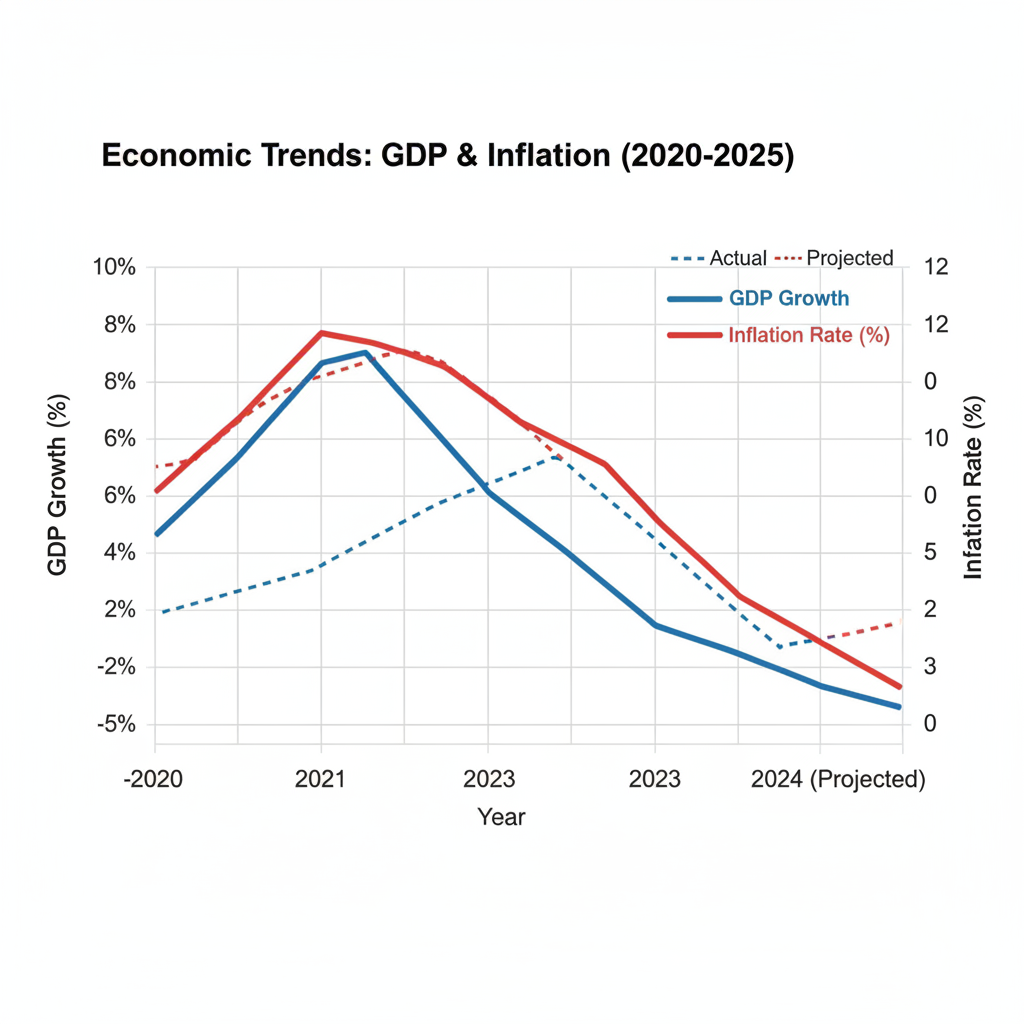
- 1970s: High inflation peaked at 14.8% in 1980 due to oil shocks
- 1990s–2010s: Relatively stable at 2–3% annually
- 2021–2022: Inflation surged to 9.1% (June 2022) due to pandemic supply disruptions and stimulus spending
- 2023–2024: Gradual return toward 3–4% as central banks raised interest rates
The Federal Reserve targets 2% annual inflation as the ideal balance between growth and stability.
How Inflation Affects Your Money
Savings Accounts
If your savings account earns 1% interest but inflation is 3%, your money is losing 2% of its purchasing power each year. This is called a negative real return.
Fixed Income Investments
Bonds and fixed annuities are particularly vulnerable to inflation because their payments don't increase with prices. A $1,000 annual bond payment buys less each year as inflation rises.
Real Estate
Real estate often serves as an inflation hedge because property values and rents tend to rise with inflation. Mortgage holders also benefit — they repay fixed loan amounts with dollars that are worth less over time.
Stocks
Equities historically outpace inflation over long periods because companies can raise prices and grow earnings. However, high inflation can hurt stock valuations in the short term.
How to Protect Your Money from Inflation
- Invest in equities: Stocks have historically returned 7–10% annually, well above inflation
- Consider real estate: Property values and rental income tend to rise with inflation
- Use Treasury Inflation-Protected Securities (TIPS): Government bonds that adjust with CPI
- Hold commodities: Gold, oil, and agricultural products often rise with inflation
- Avoid holding too much cash: Cash loses purchasing power during inflationary periods
- Negotiate salary increases: Ensure your income keeps pace with inflation
FAQ
Is some inflation good?
Yes. Moderate inflation (around 2%) is considered healthy for an economy. It encourages spending and investment (rather than hoarding cash) and gives central banks room to cut rates during recessions.
What is deflation and is it worse than inflation?
Deflation is falling prices. While it sounds good, deflation can be economically devastating — consumers delay purchases expecting lower prices, businesses cut production, unemployment rises, and the economy can spiral into recession.
How does the Federal Reserve fight inflation?
The Fed raises interest rates to make borrowing more expensive, which reduces consumer spending and business investment, cooling demand and slowing price increases.
Does inflation affect everyone equally?
No. Inflation hits lower-income households harder because they spend a larger proportion of income on necessities like food, housing, and energy — which often inflate faster than luxury goods.
What is hyperinflation?
Hyperinflation is extremely rapid inflation, typically defined as exceeding 50% per month. Historical examples include Germany in the 1920s and Zimbabwe in the 2000s, where currencies became nearly worthless.
Related Calculators
Conclusion
Inflation is an unavoidable economic reality, but it doesn't have to erode your financial security. By understanding how it works and taking proactive steps — investing in inflation-resistant assets, growing your income, and avoiding excessive cash holdings — you can protect and even grow your purchasing power over time. The key is awareness and action: don't let inflation silently diminish what you've worked hard to build.